Ready for placement on the mold and soldering.

Ready for placement on the mold and soldering.
But what will my choice of glass and the choices within that glass give, how will the different colours marry? I used available glass in my stock for flower stems and borders.
I fitted up the first cut and found section on a light table, remembering that this only approaches the impression given on a finished lamp.

Can’t wait to see the finished lamp, I’m pretty sure the flowers work.

To avoid an appearance of flatness I wanted to choose for both the flowers and the background enough nuance to represent adequately first the tulips, for which I went for a Bullseye 3334-30F Cranberry Pink sheet (770€/m2).

For the background I went for 2 colours, both from GK Techniques, the VECH 069 and VECH 826 shown here.
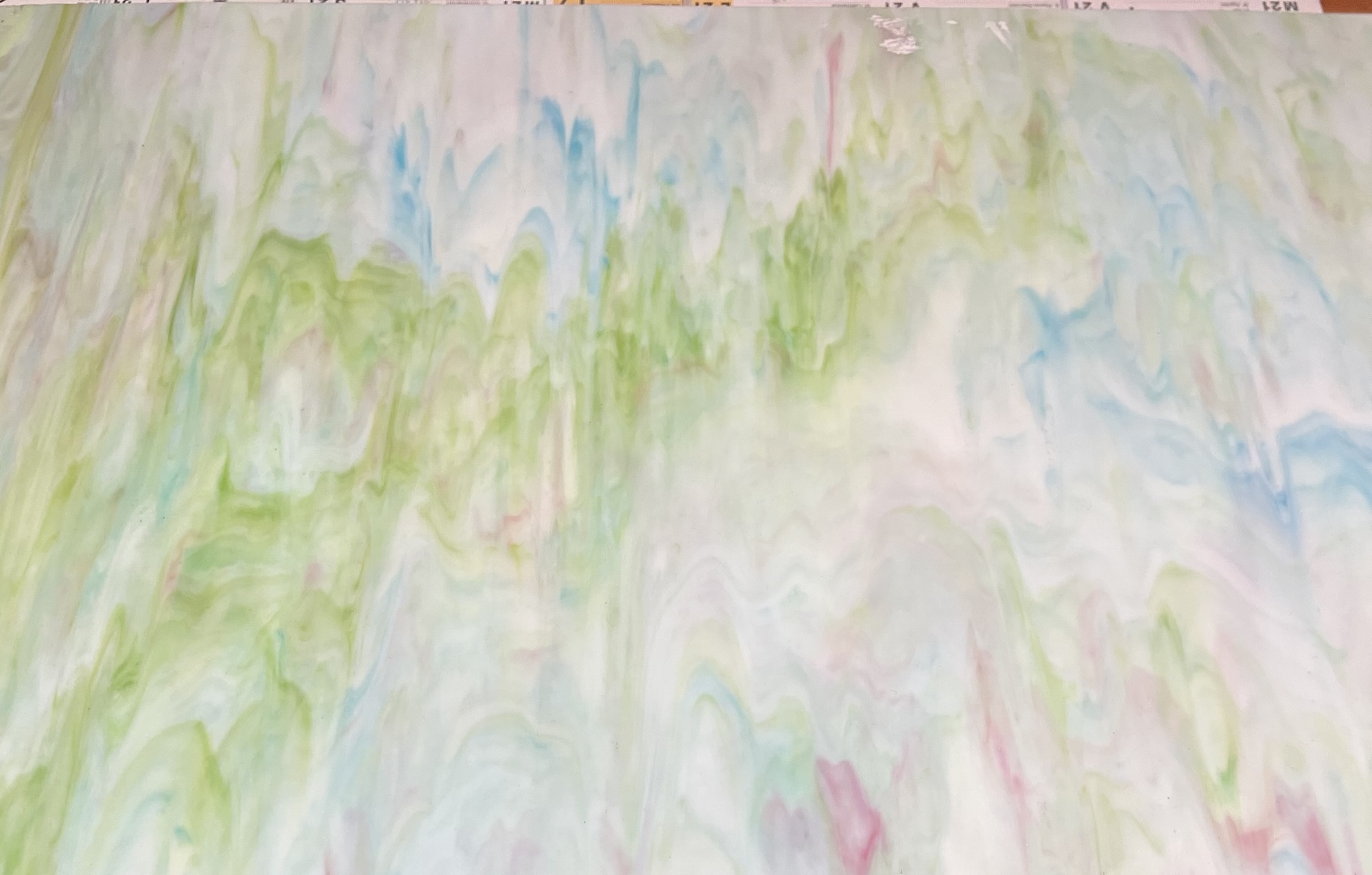
And here is the VECH 069 at a more reasonable 70€/ sheet
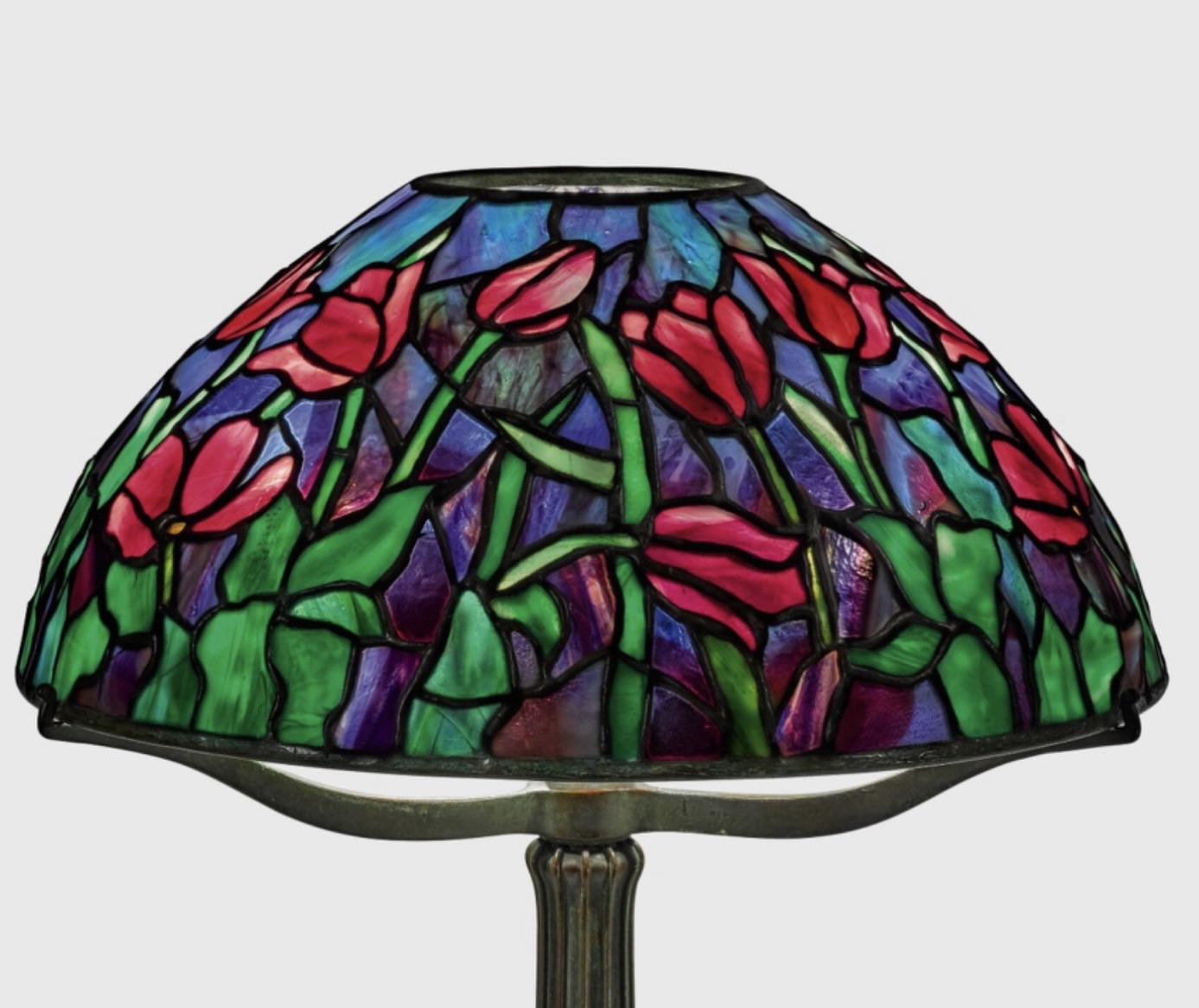
After a long discussion with Fiona, she said a lamp similar to this one would be her choice.
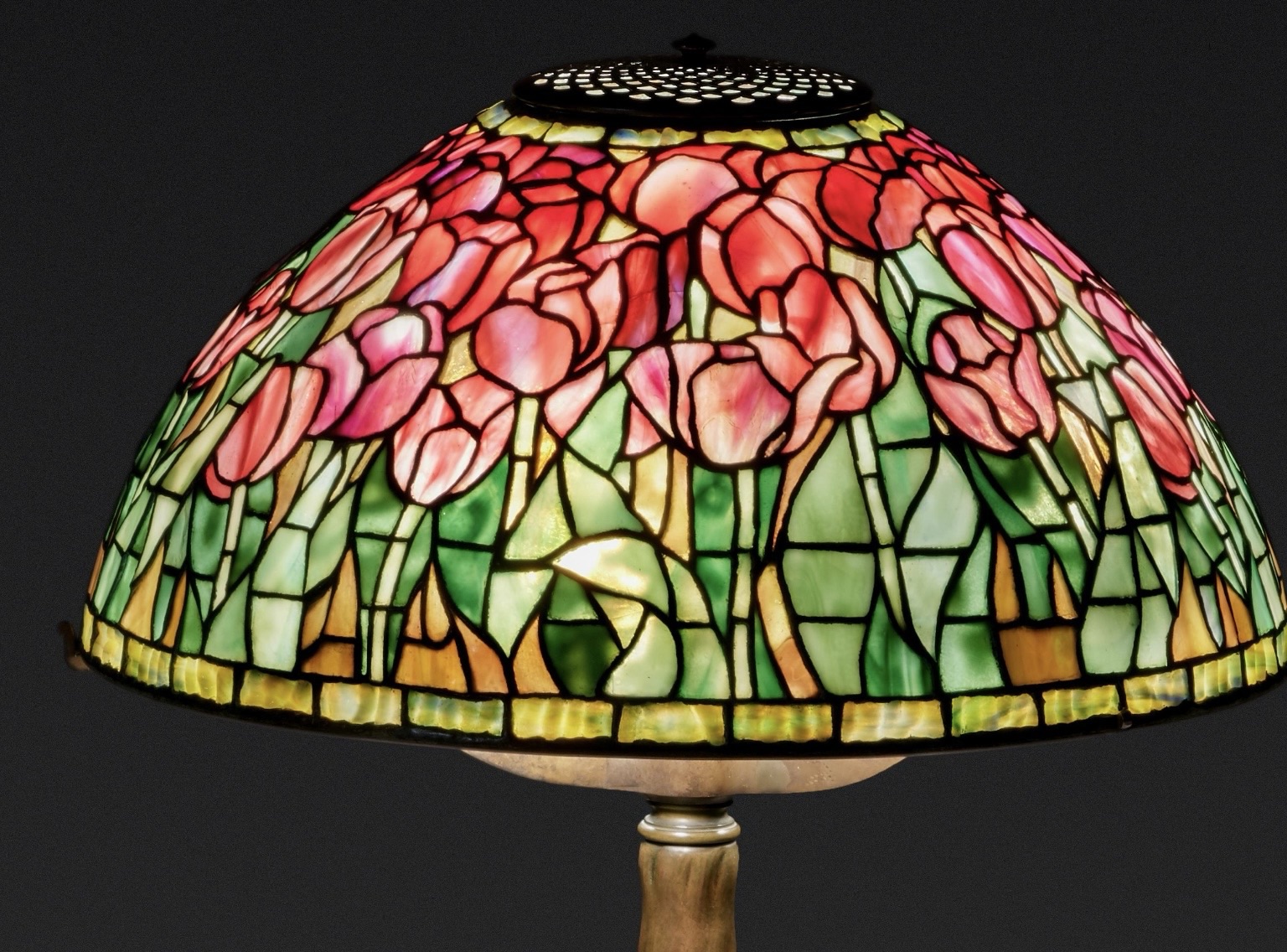
However at 16 inches, this was the Tulip design that I could find available, so next choice, choose the glass.

So after a long pause to manufacture the Peacock lamp, here I am back on the Wisteria shade, with the first section tacked onto the mold. There are a few pieces that need trimming down and re-coppering, (just waiting to finish my boxes supporting my veneer work to once again free up the workshop).
As this lamp is terribly time consuming and repetitive, I will probably start a much simpler lamp after the second repeat section.
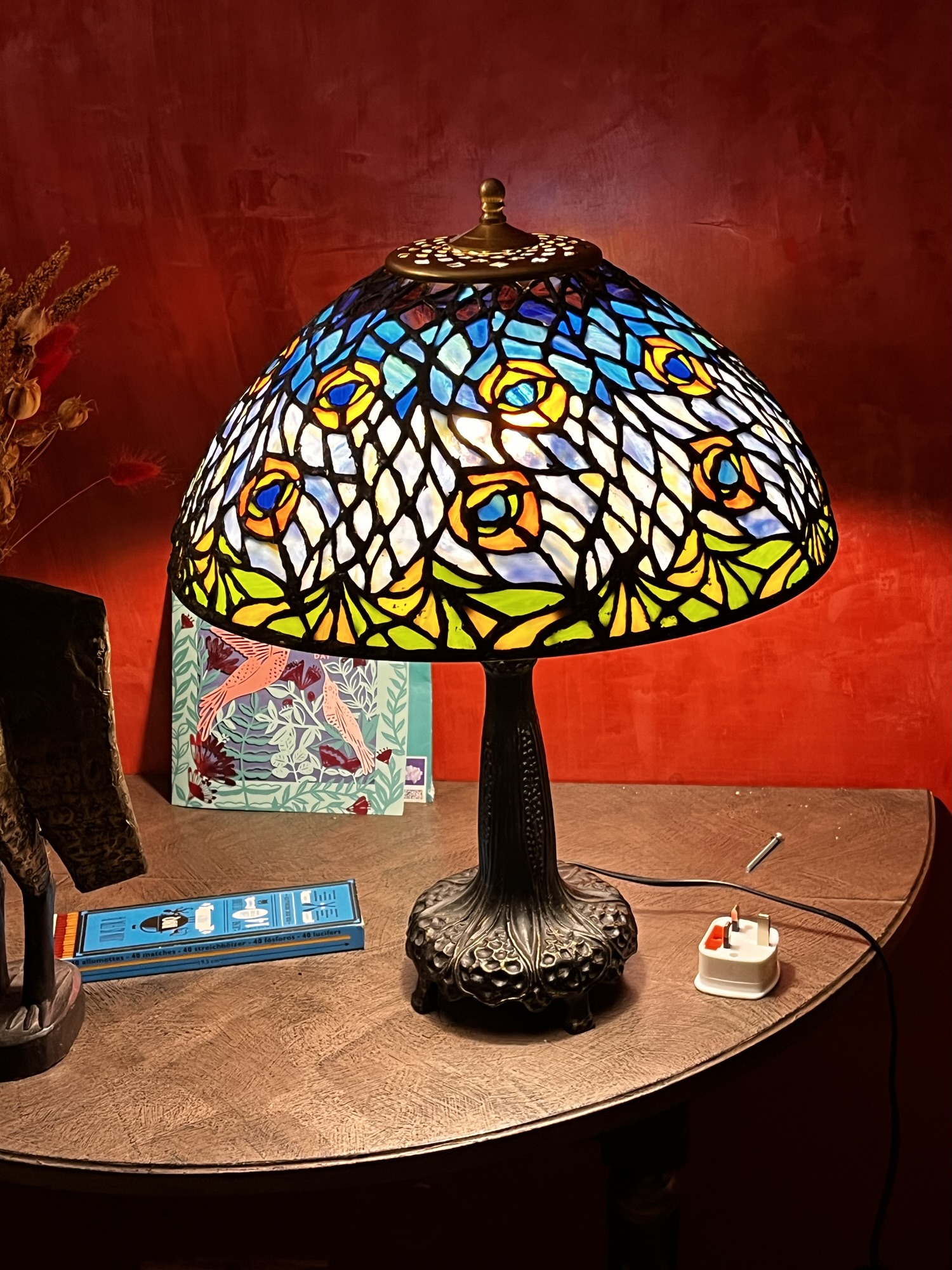
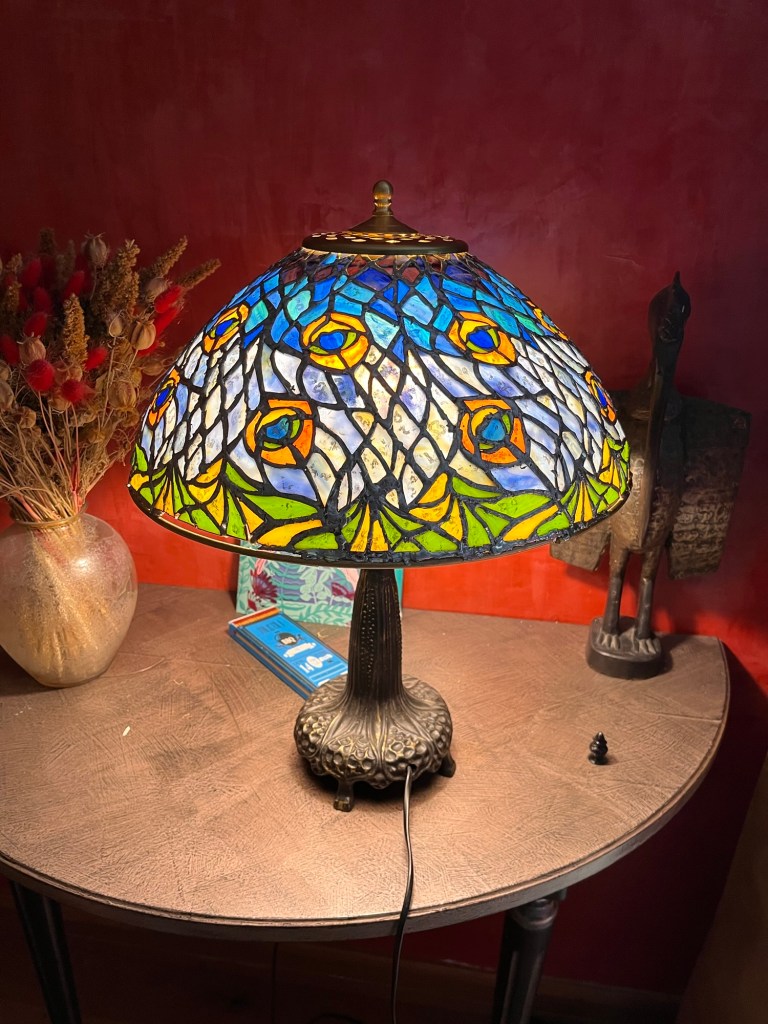
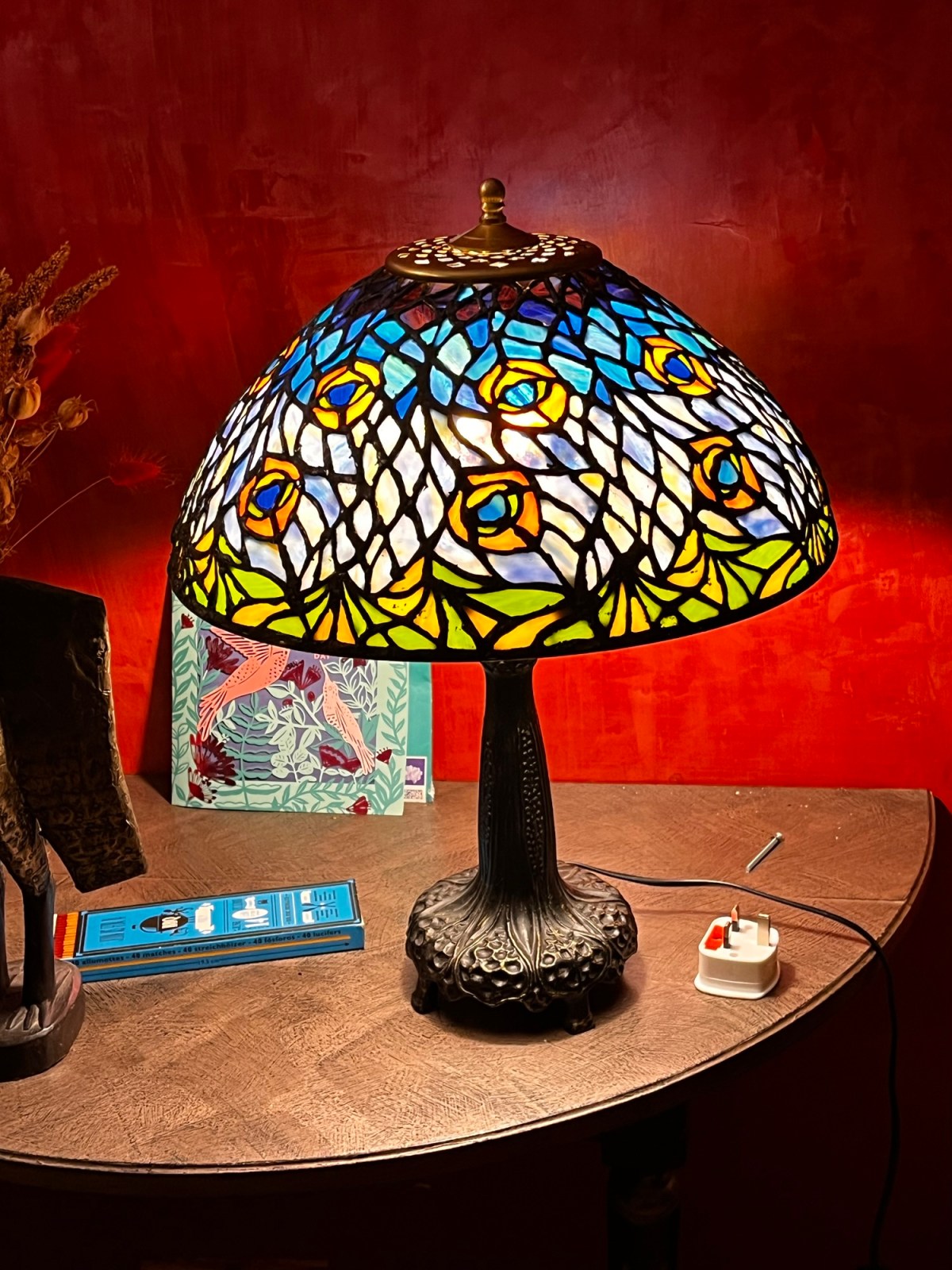
20th October till 20th January and the Peacock lamp is now finished! My photos don’t bring out the full depth of colour, but there you go.
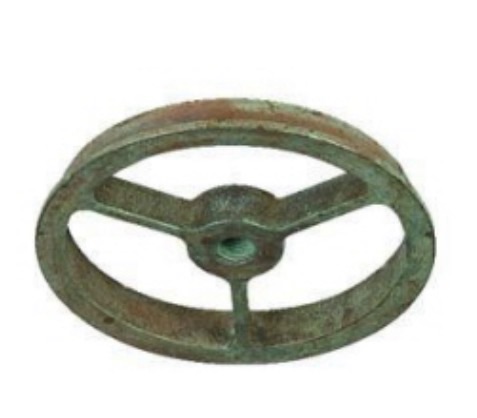
There were a number of difficulties to overcome, the first was the lack of availability of a brass upper ring or its support ring.
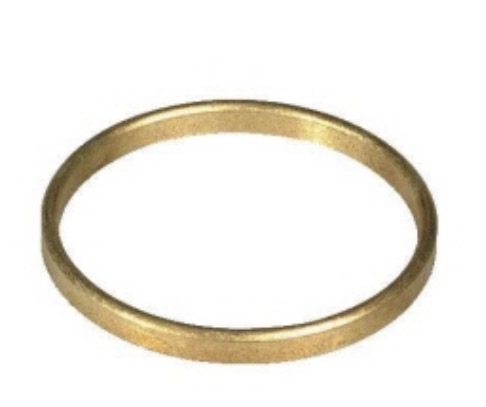
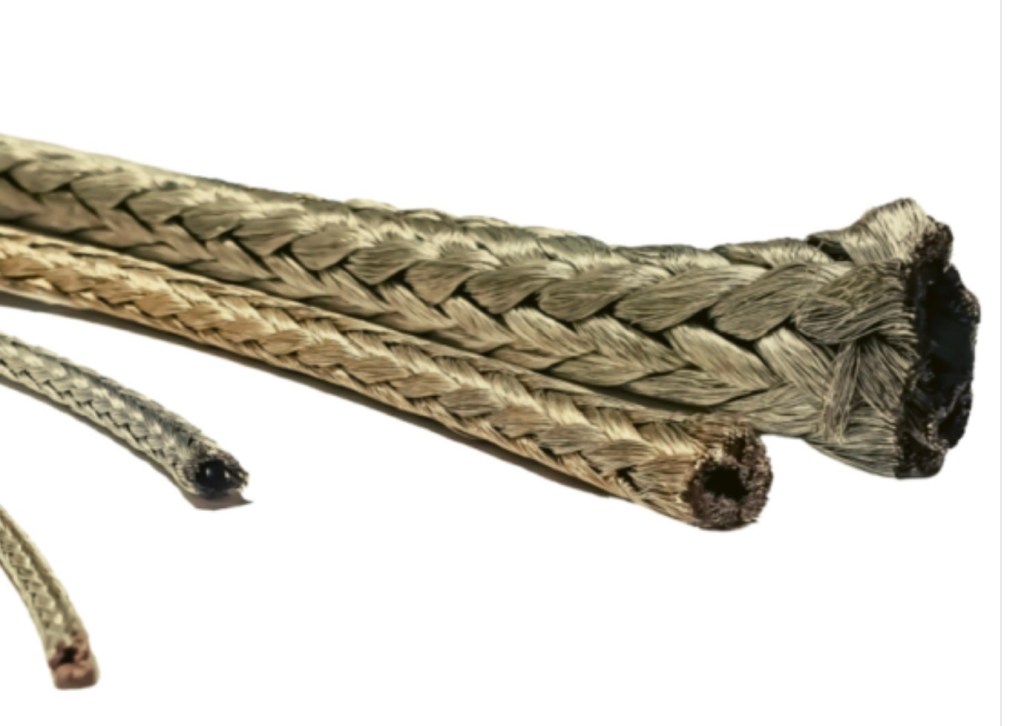
As I had already thought about strengthening the lower edge of the Wisteria lamp that is already underway I had purchased several meters of tin coated copper braid from Tressage du Dorlay, 3mm inner diameter, 6mm outer diameter. This was considerably cheaper than the brass ring (2.37€/meter as opposed to 49€) and formed easily around the finished opening after demolding. After soldering in place and coating the surface with solder, this gave a clean round form to the lampshade upper opening.
The 76mm support ring was replaced by a 140mm tin coated ring which I soldered in place on the lamp inner surface at 6 different locations. This too was considerably cheaper ( 7€ instead of 114€).
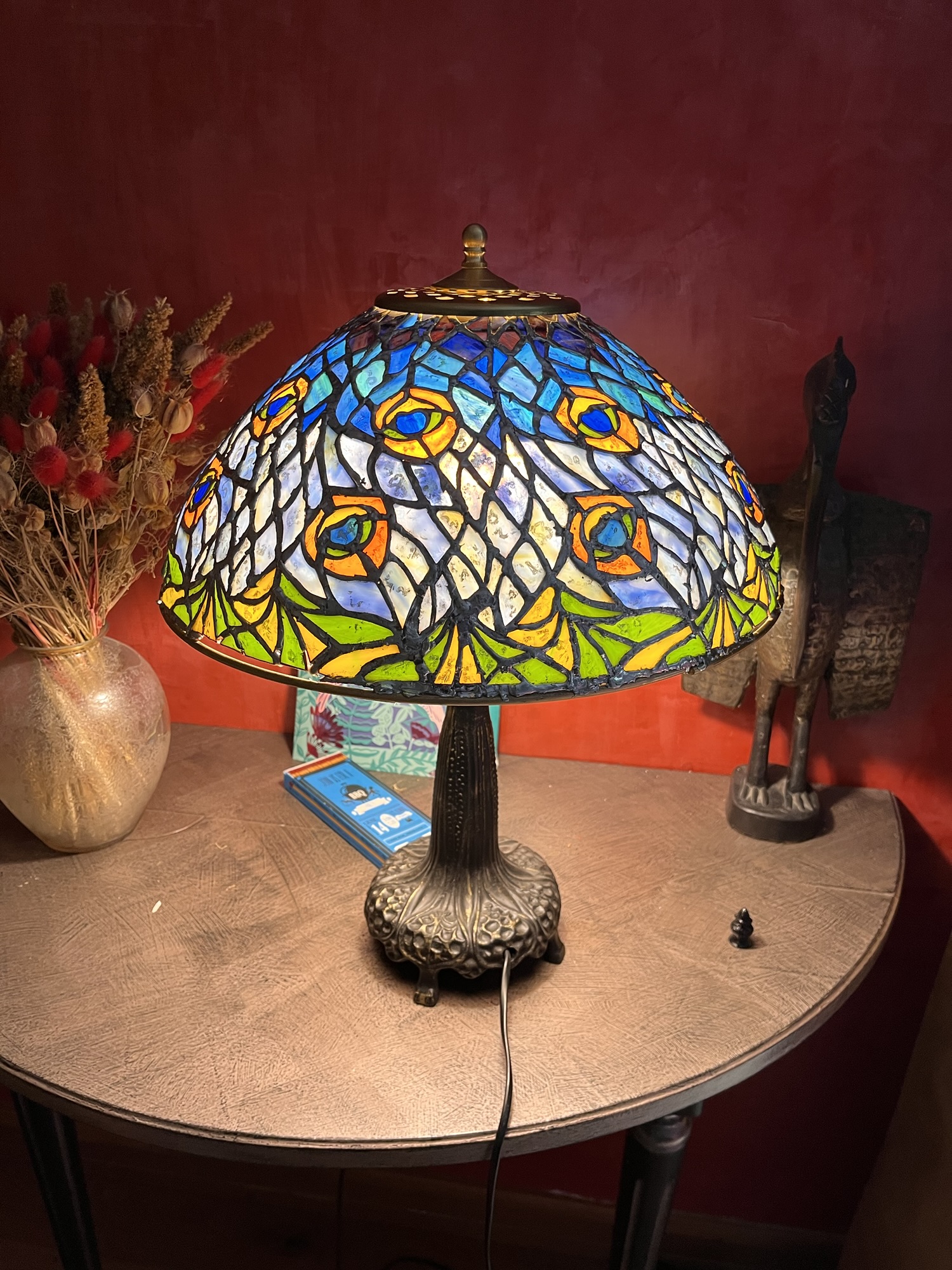
So how does the actual lamp compare with the sectors placed on the light box? Rushing to try to finish for Xmas, and not quite making it, I de-molded easily after 30 mins at 95C and mounted it carefully on an existing lamp stand.
The light table doesn’t show the colours as bright as they are. So just remains to mount a spider, solder the inside of the lamp, solder a braided ring at the top of the lamp, finish solder the outside surface, treat the outside with a patina and generally clean and tidy the lamp.
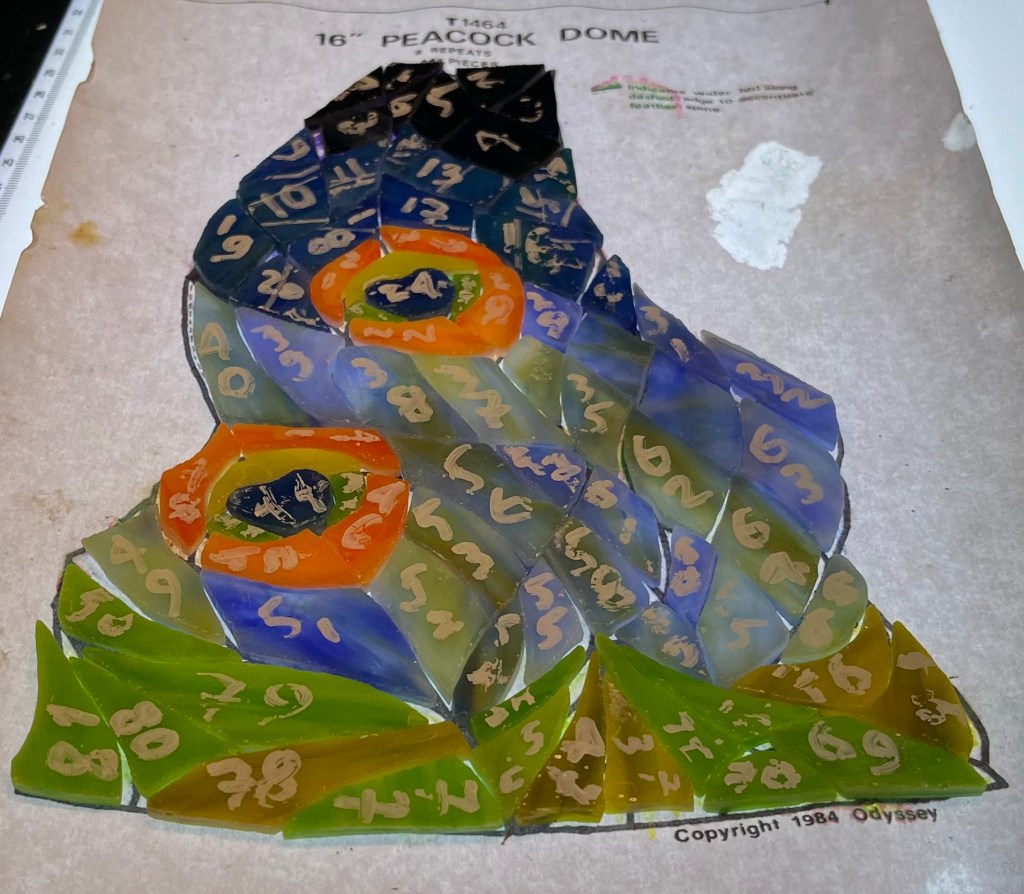
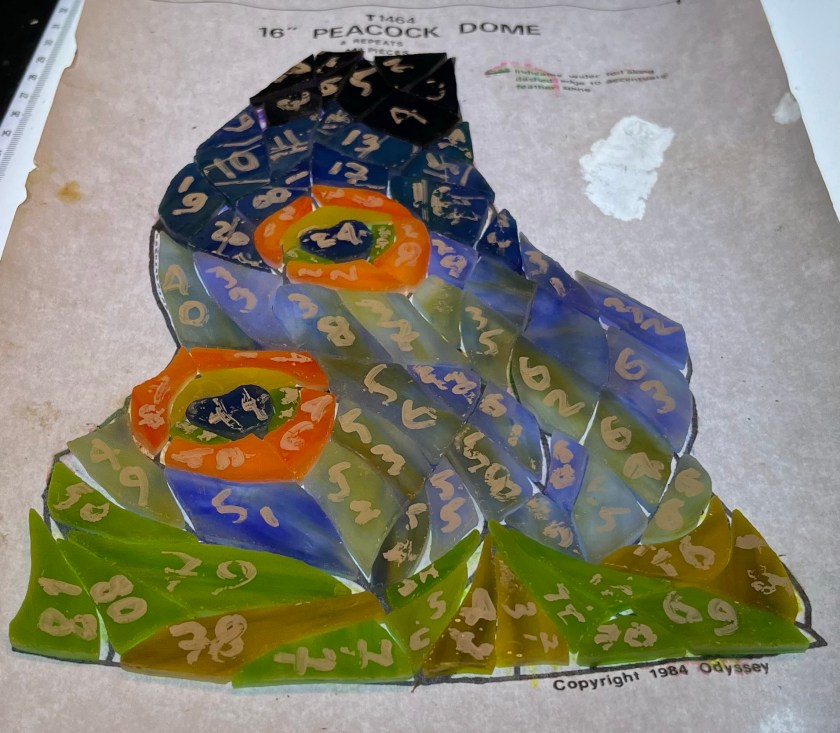
Here we are with the first of eight repeats almost finihed, I’ll swap out number 51 in blue for better blended in green/yellow blue colour. The glass colours chosen are: WISSMACH 703 WO Mystic blue purple white for the top, then bleu vert et opaline WO 197 et vert claire et opaline WO 57 et orange et opaline KO 112 from Stefatelier, Verre « Youghiogheny » bleu cobalt ambre et opaline, Vert et Jaune Chamarré from GK Terchniques
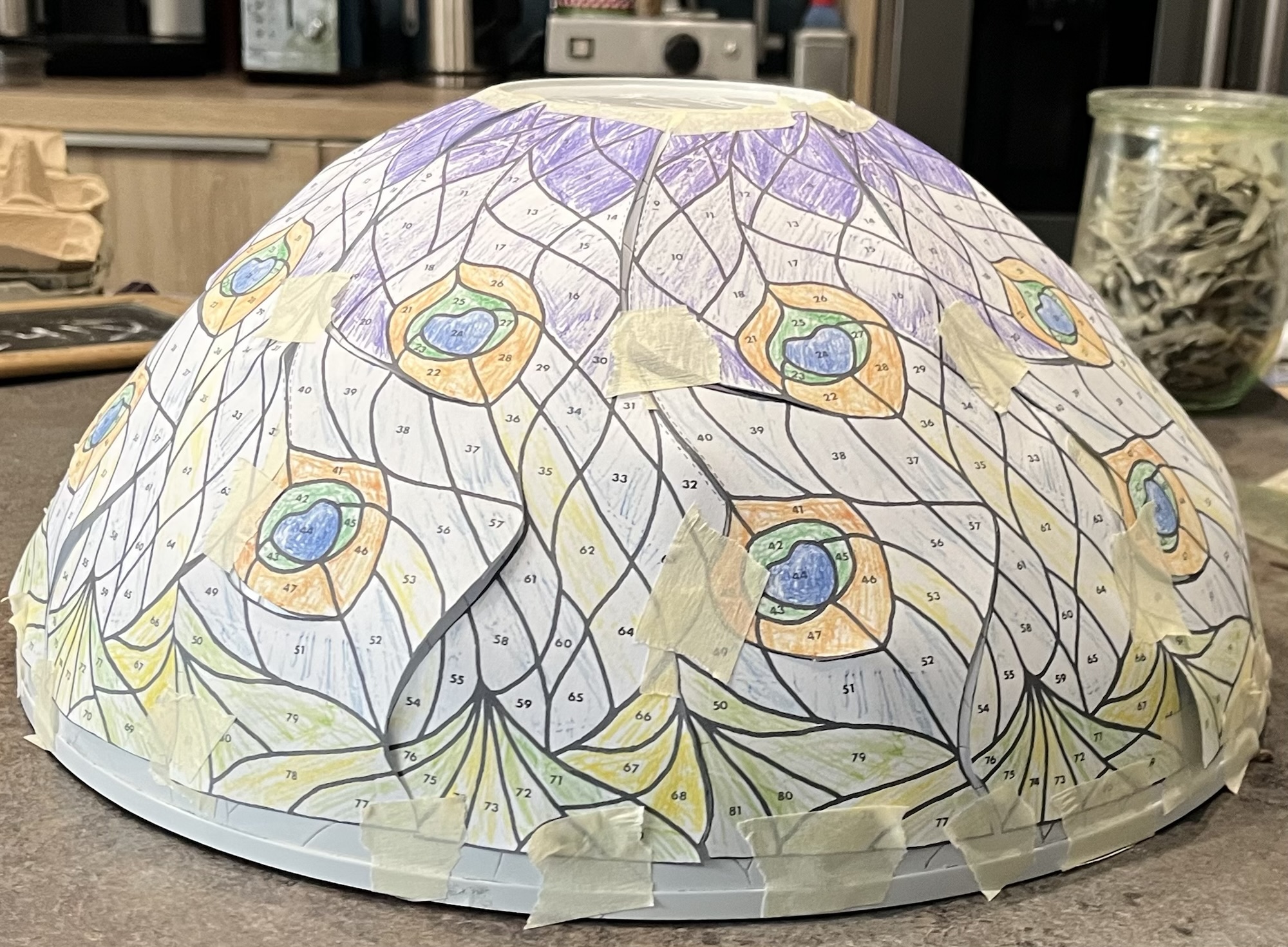
A reminder of the sketched out colour ideas
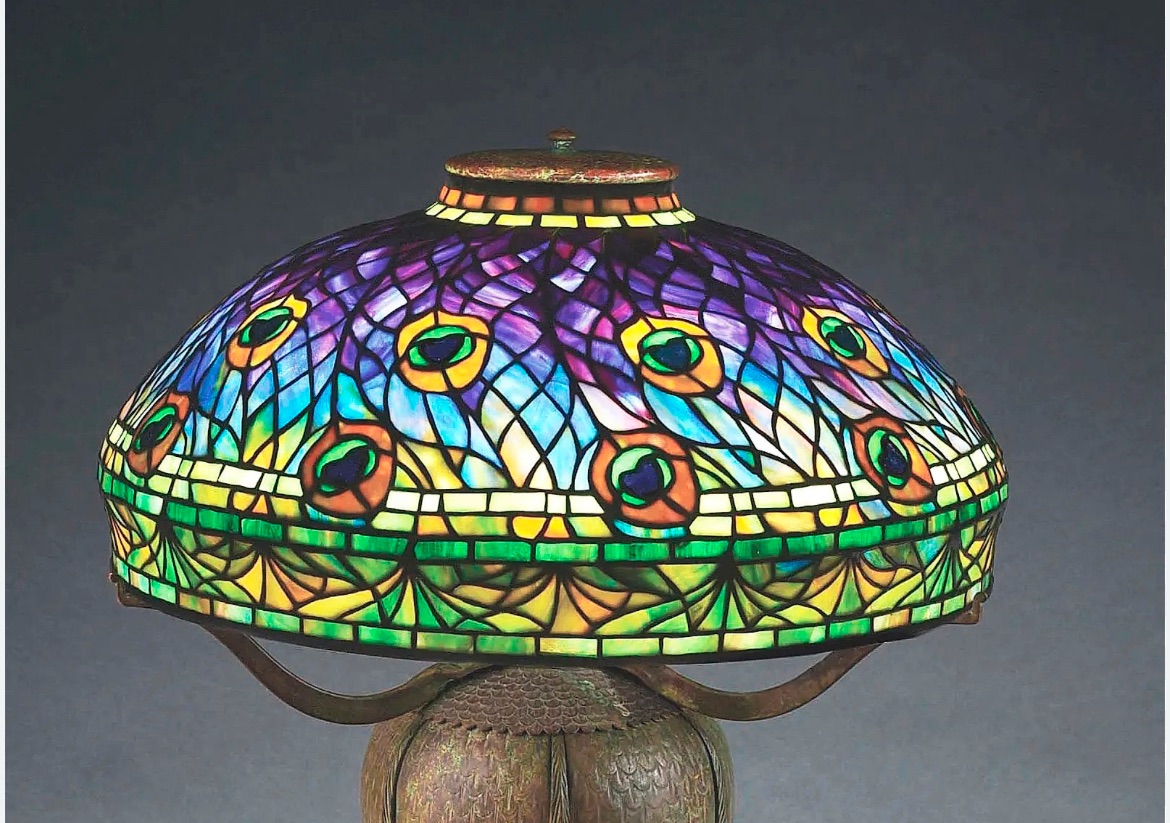
So my cousin Nicola asked me if I would make a lamp for her and after a little research on the internet she said that this one looked nice, but maybe a little smaller than this 27 inch lamp, so we went for the 16 inch version which I sketched out for glass colours
So of we go, I’ll do this one at the same time as the Wisteria!
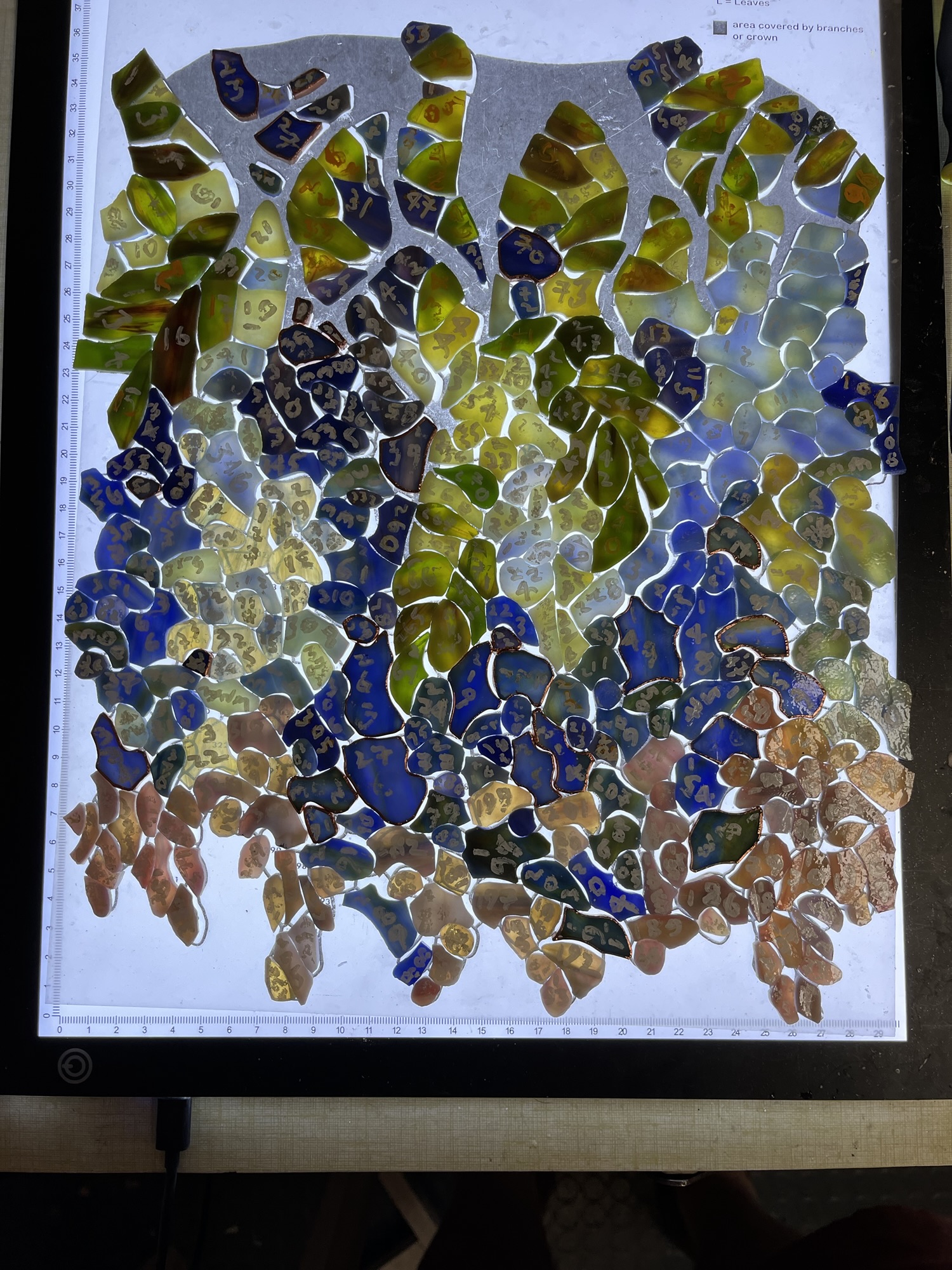
So here is the first section on the light table, I’ve identified 8 to 10 pieces that would be better in cobalt blue from 329 to 307 and 199, otherwise the effect is what I was looking for.
The next step is to check each piece individually to ensure no clashes at the final assembly after coppering and also to ensure the numbers are still readable, could take maybe 25 hours, then onto the first repeat.
 Marqueterie et Tiffany